
Are you tired of repainting your house every few years? The secret to a beautiful, long-lasting exterior lies in mastering the best exterior house painting techniques. Not only will you save time and money in the long run, but your home will also become the neighborhood gem. Ready to learn the ropes? Let’s dive in.
Preparing the Surface: The Foundation of a Durable Paint Job
Importance of Proper Preparation
Before any paint touches your exterior walls, proper preparation is crucial. Skipping this step is like building a house on sand—it’s destined to fail. A well-prepared surface ensures better adhesion, resulting in a smoother finish and longer-lasting results.
Cleaning and Repairing
Begin by cleaning the exterior. Use a power washer to remove dirt, mold, and loose paint. A clean surface is essential for the new paint to adhere properly. After washing, inspect for cracks, holes, or damaged areas. Patch these with an exterior-grade filler and sand smooth.
Pro tip: Don’t rush. Allow the surface to dry completely before moving to the next step.
Applying Primer
Priming is non-negotiable. A good primer not only provides a uniform base but also seals the surface, enhancing the paint’s durability. Choose a primer suited for the surface material—be it wood, brick, or stucco.
Selecting the Right Paint: Making Informed Choices
Weatherproof House Paint
Choosing the right type of paint is critical. For exterior surfaces, weatherproof house paint is your best bet. This type of paint is designed to withstand harsh weather conditions, preventing peeling, chipping, and fading.
Considering the Siding Material
Different materials require specific types of paint. For instance:
- Wood Siding: Use an acrylic latex paint for its flexibility and resistance to weather damage.
- Vinyl Siding: Opt for paint with a blend of urethane and acrylic resins to prevent cracking.
- Brick or Stucco: Acrylic latex paint is also suitable here, providing durability and breathability.
- Expert Insight: Always follow the manufacturer’s recommendations for the best results.
Color and Finish Selection
The color and finish not only impact your home’s aesthetic but also its protection. Lighter shades reflect sunlight, helping keep structures cooler, while a satin or semi-gloss finish offers better durability and ease of cleaning compared to flat finishes.
Mastering the Painting Process: Techniques for Success
Using the Right Tools
Quality tools make a world of difference. Invest in good brushes, rollers, and sprayers. Use a brush for edges and smaller areas, and a roller or sprayer for larger surfaces to ensure even coverage.
Applying the Paint
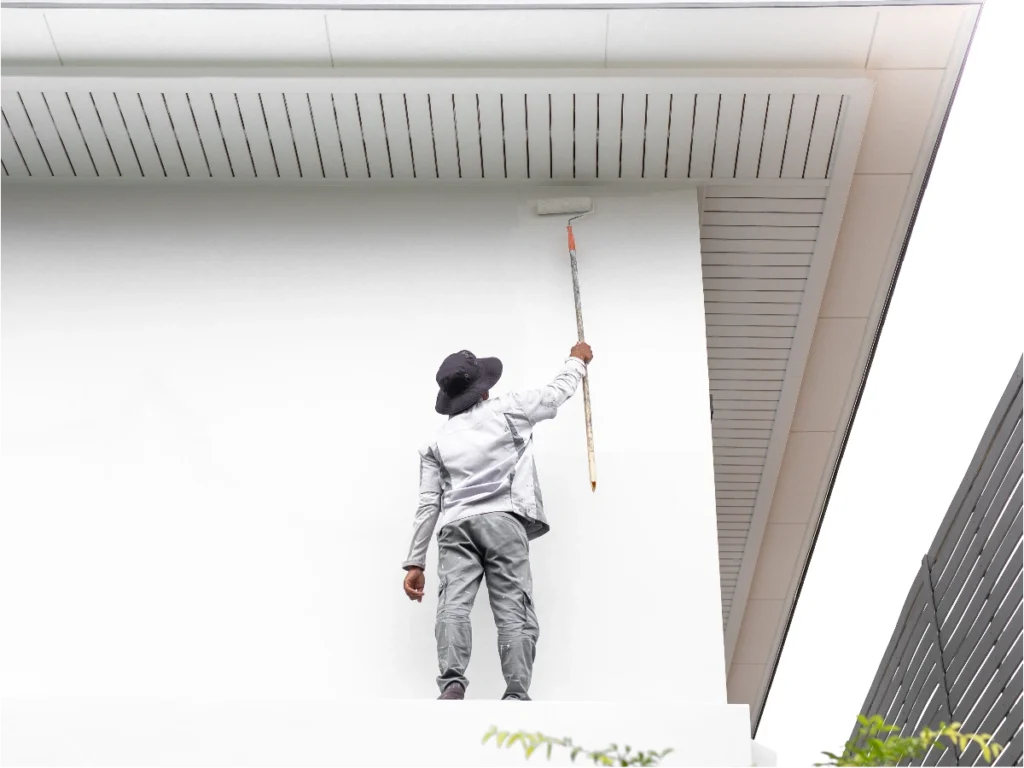
Work in manageable sections. Start from the top and work your way down to avoid streaks. Apply the paint in thin, even coats. It’s better to have two thin coats than one thick one, as this reduces the risk of peeling and ensures a uniform finish. Ensure drying time between coats as per the paint manufacturer’s instructions.
Weather Considerations
Always check the weather forecast before starting. Ideal painting conditions are mild temperatures and low humidity. Avoid painting in direct sunlight, as it can cause the paint to dry too quickly, leading to imperfections.
Maintaining Your Paint Job: Long-Term Care
Regular Inspections
Regularly inspect your exterior for signs of wear and tear. This proactive approach helps you catch and fix minor issues before they become major problems.
Cleaning the Surface
Keep your exterior clean. Gently wash the surface every year to remove dirt and pollutants that can degrade the paint.
Touch-Up and Repainting
Perform touch-ups as needed. Small nicks or scratches can be easily fixed, preventing the need for a complete repaint.
Actionable Tip: Keeping a small amount of leftover paint helps for quick touch-ups in the future.
FAQ
How does exterior house painting impact a home's curb appeal?
A: Exterior house painting significantly enhances a home’s curb appeal, making it more attractive and potentially increasing its market value. Fresh, well-applied paint gives a home a well-maintained and inviting look.
What are the best ways to prepare a house for exterior painting?
A: Preparation involves cleaning the surface with a power washer, repairing any damages, sanding rough areas, and applying a suitable primer. This ensures the new paint adheres well and lasts longer.
Why is weatherproof house paint important for outdoor projects?
Weatherproof house paint is essential for outdoor projects as it is formulated to withstand harsh weather conditions, reducing the risk of peeling, fading, and other damage caused by sun, rain, and temperature fluctuations.
How can I maintain my exterior house paint job to ensure its longevity?
Regular inspections, cleaning, and timely touch-ups are key to maintaining your exterior paint job. Keeping the surface free from dirt and pollutants, and fixing small damages promptly, can significantly extend the life of the paint.
Conclusion
Investing time in learning the best exterior house painting techniques pays off with stunning, long-lasting results. From proper preparation and selecting the right materials to mastering the application process and maintaining your work, each step is crucial. Follow these guidelines, and your home’s exterior will not only look incredible but also stand strong for years to come.
So, what are you waiting for? Grab those brushes and start transforming your home!
Content Source
Sherwin-Williams for expert guidance on exterior house paint types and best application techniques, Benjamin Moore for insights on color selection and paint finishes for different surfaces, Behr Paint for recommendations on weatherproof house paints and durability factors, U.S. Department of Energy for information on how exterior colors impact heat absorption and energy efficiency, This Old House for professional tips on surface preparation, priming, and long-term paint maintenance